For many homeowners in Naples, FL, spring and summer bring beautiful weather, blooming landscapes, and plenty of opportunities to enjoy the outdoors. Unfortunately, they also bring high pollen counts, mold spores, dust, and other airborne allergens that can make life uncomfortable. If you find yourself sneezing more often, waking up congested, or dealing with itchy eyes even while indoors, your home’s indoor air quality may be contributing to the problem.
The good news is that improving your indoor air quality can help reduce allergens inside your home and create a healthier, more comfortable living environment for your family.
Why Allergies Can Be Worse Indoors
Many people assume they’re safe from allergens once they come inside, but that’s not always the case. Pollen clings to clothing, shoes, and pets before making its way into your home. Once inside, it mixes with dust, pet dander, mold spores, and other particles that continue circulating through your HVAC system.
Southwest Florida’s warm, humid climate can also encourage mold growth, making indoor air quality even more important during the spring and summer months. Some common signs that poor indoor air quality may be affecting your home include:
- Frequent sneezing or coughing indoors
- Itchy or watery eyes
- Runny or congested nose
- Dust buildup around vents and furniture
- Persistent musty odors
- Increased allergy symptoms while you’re at home
If these symptoms seem worse indoors than outside, it’s worth considering ways to improve the air circulating through your HVAC system.
Air Filters Make a Big Difference
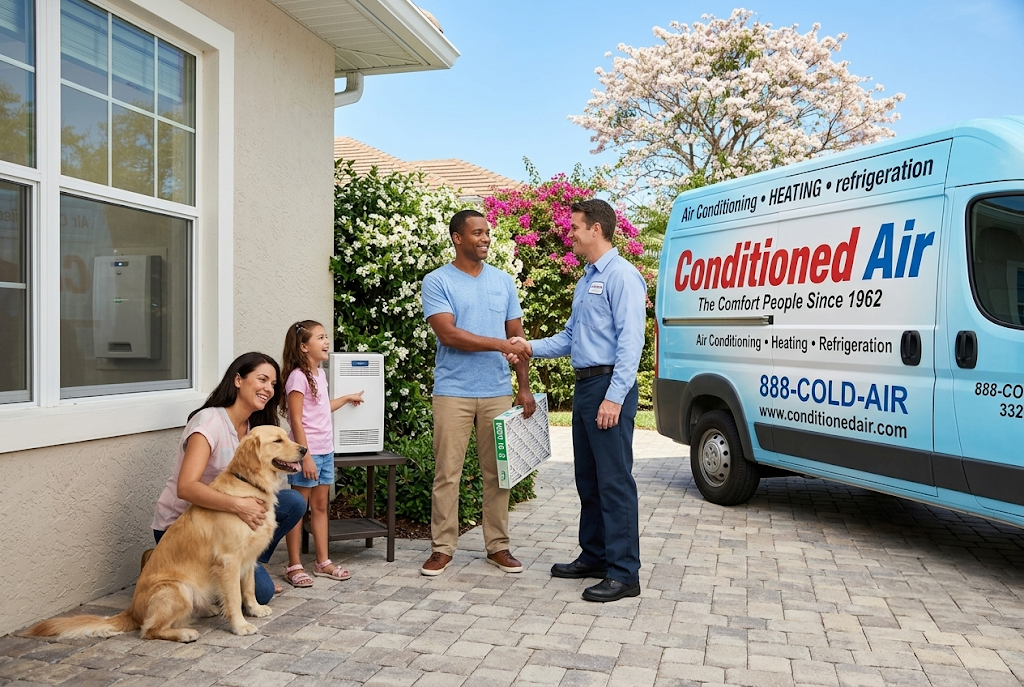
One of the simplest ways to improve indoor air quality is to install and regularly replace your HVAC filter. Your filter captures dust, pollen, pet dander, and many other airborne particles before they circulate throughout your home.
A clogged or dirty filter can’t do its job effectively. It may also restrict airflow, forcing your HVAC system to work harder while allowing more allergens to remain in the air.
Homeowners should check their air filters regularly, especially during allergy season. Depending on your household, pets, and filter type, replacing the filter every 1 to 3 months can help maintain cleaner indoor air and support better HVAC performance.
Consider a Whole-Home Air Purifier
While quality air filters capture many larger particles, a whole-home air purification system offers an additional layer of protection. These systems work alongside your heating and cooling equipment to reduce even smaller airborne contaminants throughout your home.
Modern air purification systems can help reduce:
- Pollen
- Dust mites
- Pet dander
- Mold spores
- Certain bacteria
- Some airborne viruses
- Fine airborne particles
Unlike portable air purifiers that treat only a single room, whole-home systems improve air quality throughout your entire house whenever your HVAC system is operating. Many homeowners notice cleaner air, less dust accumulation, and fewer allergy symptoms after installing a professionally selected air purification system.
Enjoy Cleaner Air This Allergy Season
If seasonal allergies have you dreading spring and summer in Naples, improving your indoor air quality may provide meaningful relief. A combination of routine HVAC maintenance, clean air filters, and a professionally installed whole-home air purifier can help reduce airborne allergens while keeping your heating and cooling system operating efficiently.
Schedule an appointment with Conditioned Air Naples, The Comfort People Since 1962.